
A slab leak is a leak in a water or drain line that runs under your home’s concrete foundation. Most homes in San Antonio are built on slabs, and a leak under there can quietly soak the soil under your house, drive up your water bill and, over time, contribute to foundation problems.
The good news is that slab leaks can be found and fixed. The Right Guyz locates the leak, explains your options for reaching it and gives you a firm price before we start.
Warning signs of a slab leak
- A warm or hot spot on a tile, wood or carpeted floor (often a hot water line)
- The sound of running water when nothing is on
- A water meter that keeps turning with every fixture off
- Damp carpet, swollen baseboards or a musty smell
- New cracks in tile or flooring
- Low water pressure or a water heater that runs constantly
- A water bill that climbs month after month
Why San Antonio homes are prone to them
San Antonio has a lot of expansive clay soil. When it rains, the clay swells. During our long, dry summers, it shrinks and cracks. That constant movement shifts foundations and puts stress on the pipes running through and under them. Add high water pressure, which is common in parts of the city, and joints and pipe walls wear faster. Older homes may also have copper or galvanized lines under the slab that have simply reached the end of their life.
Ways to repair a slab leak
There’s more than one way to fix a slab leak, and the right choice depends on where the leak is and the shape of the rest of the line.
Direct repair through the slab. We open a small section of floor right over the leak, fix the pipe and patch the concrete. This is often the fastest route when the leak is in an accessible spot.
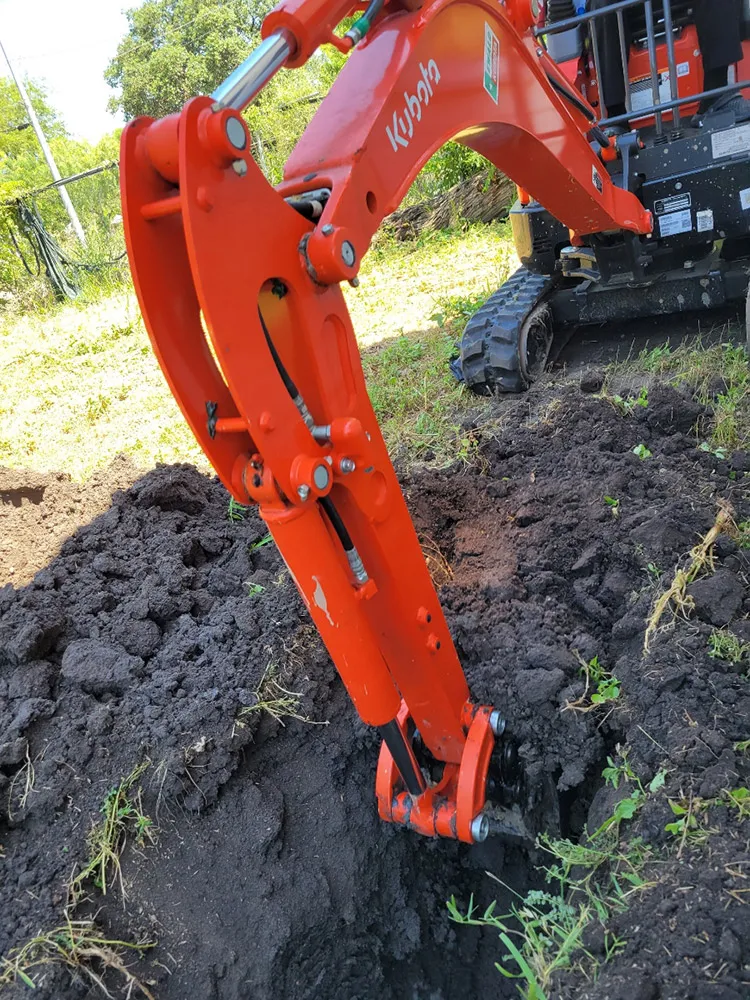
Tunneling under the slab. We dig from outside the house and tunnel under the foundation to reach the pipe, which avoids breaking up floors inside. It’s especially useful for drain lines and for leaks under finished floors or cabinets. We do tunnel and under-slab repairs regularly.
Rerouting the line. If a line under the slab is failing in more than one place, we can abandon it and run a new line through the walls or attic. That removes the pipe from under the slab entirely.
Protect the rest of the system
After a slab leak, we check your water pressure. If it’s running over 80 psi, a new pressure reducing valve is cheap insurance against the next leak. If the leak is on a drain line, a sewer camera inspection shows us the condition of the rest of the line under the house.