
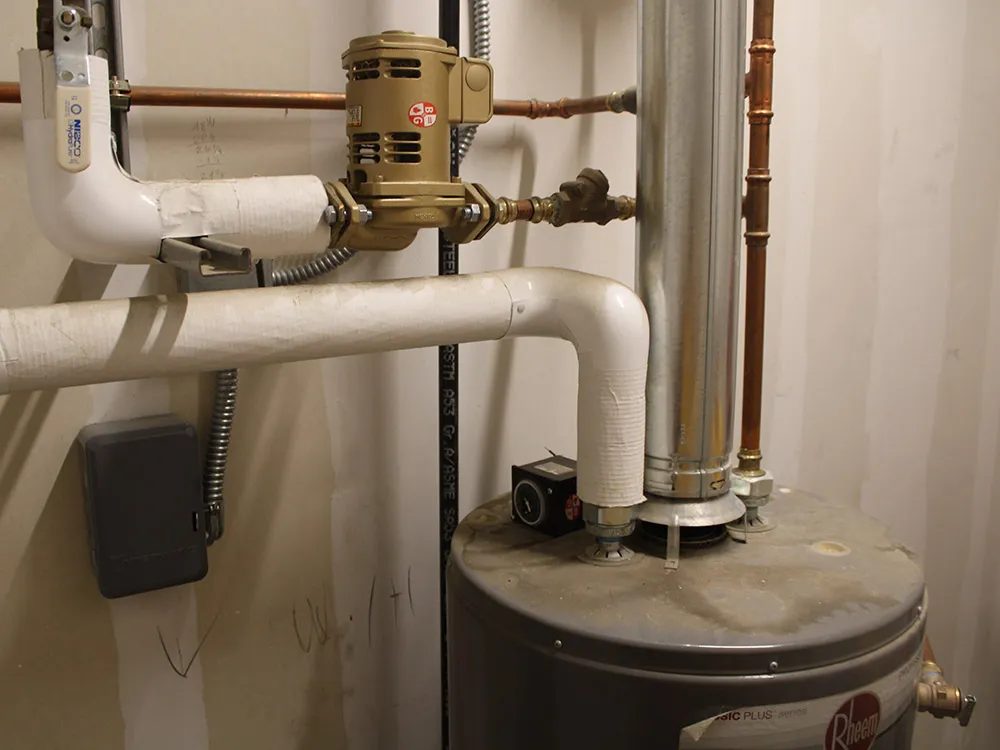
Water pressure that’s too high doesn’t feel like a problem. The shower feels great and the sprinklers throw water all the way to the curb. But inside your walls, high pressure is wearing out everything it touches. Faucets drip, toilets run, supply lines burst and water heater relief valves start to leak.
A pressure reducing valve, or PRV, keeps that in check. When the valve wears out, pressure creeps up, often without anyone noticing. The Right Guyz tests your pressure and replaces failing valves with posted starting prices.
Signs your water pressure is too high
- Banging or hammering pipes when a faucet or appliance shuts off
- Faucets that drip and toilets that run even after new parts
- A water heater relief valve that drips or discharges
- Supply lines or washing machine hoses that burst
- Sprinklers or faucets that spray much harder than they used to
- Water pressure that goes up and down during the day
Why this matters in San Antonio
Water pressure in parts of San Antonio can run high, depending on elevation and where you are on the water system. Plumbing code requires a pressure reducing valve when the pressure coming into a home is over 80 psi, and many homes around the city were built with one for that reason.
Like anything mechanical, PRVs wear out. Inside the valve, a spring and diaphragm do the work, and our hard water adds mineral buildup that makes them stick. When the valve fails, it usually fails open, which lets full street pressure into the house.
Our PRV prices
We post our prices so you know what to expect:
- 3/4 inch PRV replacement: starting at $800, before taxes
- 1 inch PRV replacement: starting at $900, before taxes
Starting prices are for basic direct replacements of the same size valve. The final price depends on how deep the valve is, how easy it is to reach, and whether we run into hard ground, rocks or roots. Valve boxes, new shut-off valves and changes to existing or crowded piping are extra. PRV replacements come with a 1-year warranty on parts and labor, and you’ll get the full price before any work starts.
Protect your water heater and pipes
High pressure is one reason we include an expansion tank with every water heater replacement. If you’ve had repeated leaks, a burst supply line or a slab leak, checking your pressure should be one of the first steps. It takes a gauge and a couple of minutes, and it can save you from the next leak.