
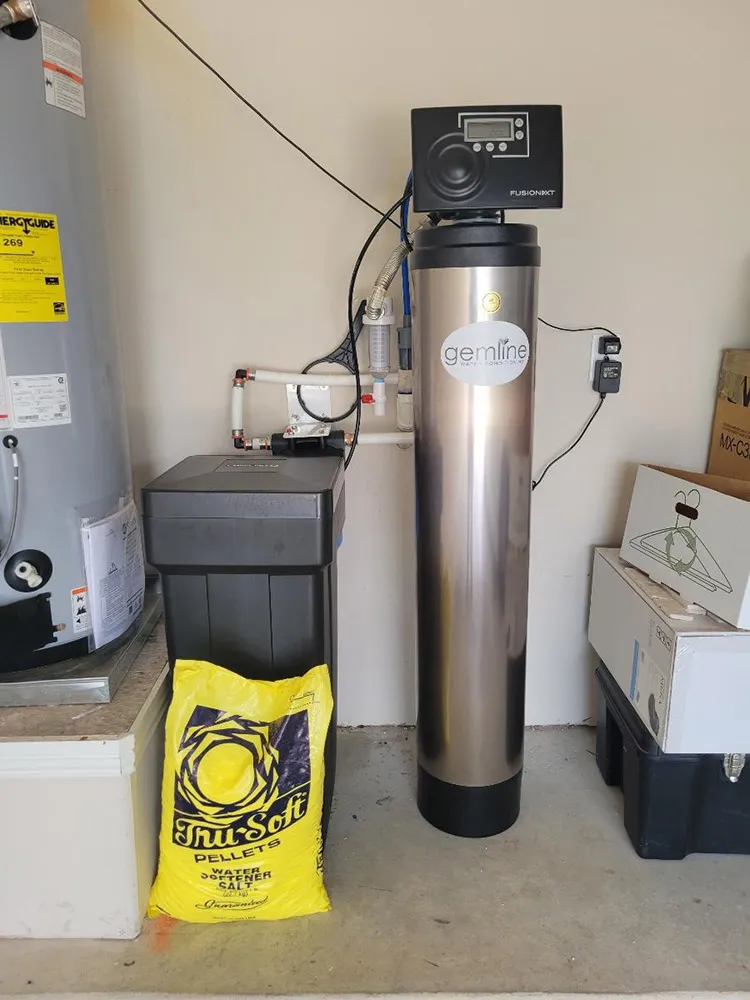
If you’ve lived in San Antonio for any length of time, you’ve seen what our water does. There’s the white crust around faucets and shower heads, the spots on glasses fresh out of the dishwasher, and the soap that never seems to rinse off. What you don’t see is the same scale building up inside your pipes, your water heater and every appliance that uses water.
A water softener takes the hardness minerals out of the water before they reach the rest of your plumbing. It’s one of the best things you can do to protect a new water heater, and most families notice the difference in the shower within a day or two.
Signs you need a water softener
- White or chalky buildup on faucets, shower heads and glass shower doors
- Spots on dishes and glasses, even with rinse aid
- A water heater that rumbles, pops or has a short life
- Dry skin and hair, or soap and shampoo that don’t lather well
- Clogged shower heads and faucet aerators
- Dingy laundry and towels that feel stiff
Why hard water matters so much here
Most of San Antonio’s water comes from the Edwards Aquifer. That water spends a long time moving through limestone, and it picks up calcium and magnesium along the way. When hard water heats up, those minerals come out and stick to whatever they touch. In a water heater, they form a layer of sediment on the bottom of the tank. In a tankless water heater, they coat the heat exchanger. In your fixtures, they clog aerators and wear out cartridges.
A softener stops most of that before it starts. That’s why we often recommend one alongside a water heater replacement, so the new heater lasts as long as it should.
What a good install looks like
We install Charger water softeners, and a softener is only as good as its setup. It needs to be sized for your household, set to regenerate based on your actual water hardness, and plumbed with a bypass valve so you can service it without shutting down the house. It also needs a proper drain connection with an air gap. We take care of all of that, and we’ll show you how to check the salt and what to do if it ever stops working right.
A lot of San Antonio homes already have a softener loop in the garage, which makes the job simpler. If yours doesn’t, we can add the plumbing.
Straight talk on water treatment
You may have had a salesperson in your kitchen with a test kit and a high-pressure pitch. That’s not how we work. Tito will test your water, explain what the results mean, and tell you what he’d put in his own house. If a softener isn’t what you need, he’ll tell you that too. If you’re more worried about taste, smell or chlorine, take a look at our water filtration options.